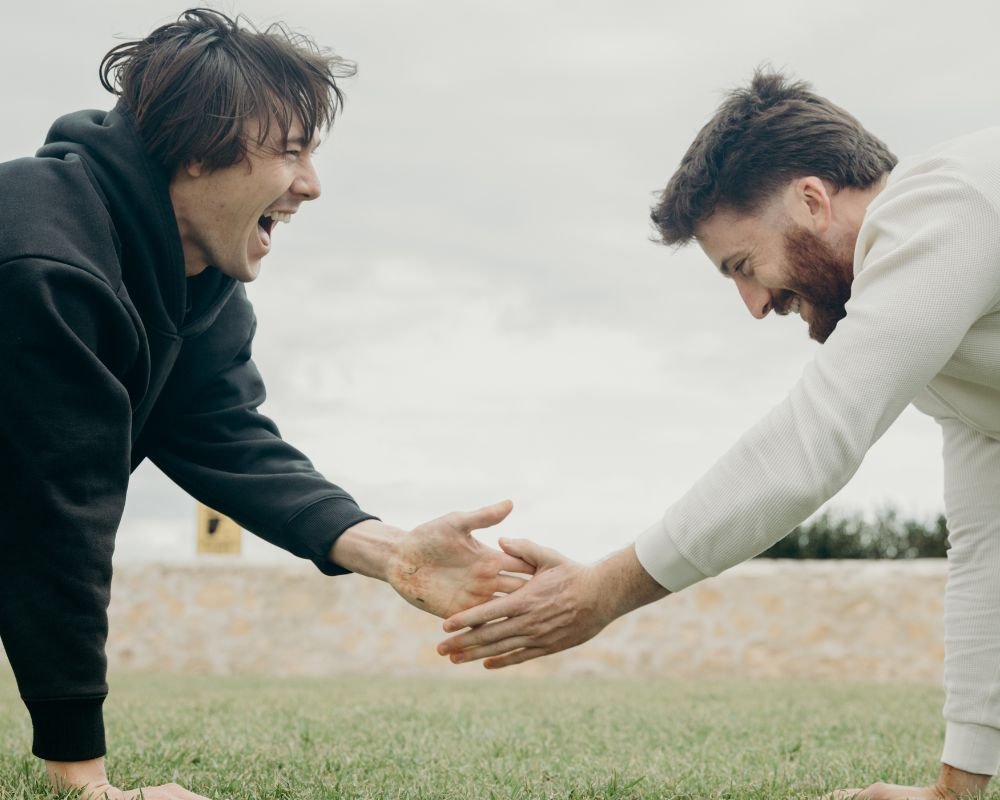
Every June, in hotel gyms before breakfast service, in restaurant back rooms between sittings, in bars just after close, and in offices where someone’s quietly counting reps between emails, Aussies start dropping to the floor. And doing push-ups.
Thank you for reading this post, don't forget to subscribe!Not for punishment. Not for aesthetics. But for something that feels a bit bigger than all of that.
In 2026, Australia’s largest mental health and fitness movement, The Push-Up Challenge, returns for its tenth year – and it’s once again inviting Australians, especially those in hospitality, to get involved.
From 3 to 26 June 2026, participants will take on 3,307 push-ups over 24 days. The number is deliberate. It represents the 3,307 lives lost to suicide in Australia in 2024. One push-up at a time, the idea is simple: move your body, and in doing so, hold space for something that’s often hard to talk about.
It sounds intense on paper. But in practice, it’s surprisingly human.
There’s laughter between sets. Group chats filled with “how many are you on today?” There are team challenges in kitchens and friendly rivalry in hotel departments. And there are also quieter moments – people taking a breath between reps and realising they haven’t checked in with themselves properly in a while.
Now in its tenth year, The Push-Up Challenge has become less about fitness performance and more about something softer: connection.
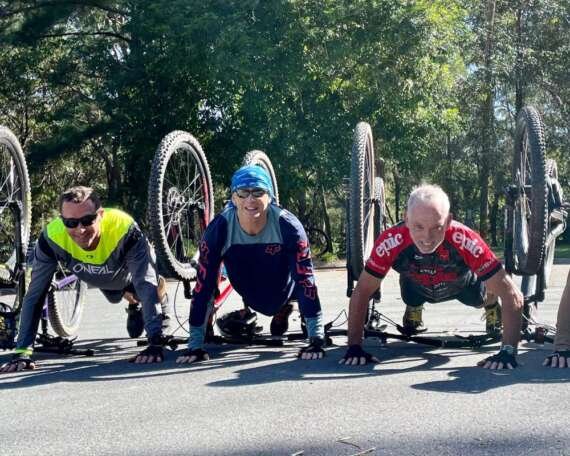
Not just push-ups – but a reason to check in
You don’t need to be fit. You don’t need to be consistent. And you definitely don’t need to be able to do 50 push-ups in a row to take part.
The idea is to show up in whatever way you can.
Each day comes with a set number of push-ups paired with a mental health fact or story – a small prompt that turns movement into reflection. Over time, it becomes a rhythm: move, learn, think, repeat.
And if push-ups aren’t your thing, there’s room for that too. Squats, sit-ups, or your own version of movement all count. The point isn’t precision. It’s participation.
Behind it all is Nick Hudson, who created the challenge after his own experience with depression. What began as a small idea between friends has since grown into something much bigger – more than a million Australians involved, and over $60 million raised for mental health services.
But ask him what matters most, and it usually comes back to the same thing: getting people talking.
“Mental health challenges will affect nearly everyone at some point in their lives,” he has said. “Every push-up, and every conversation about mental health, brings us one step closer to making a real difference.”
Why hospitality is leaning in
There’s something particularly fitting about hospitality being part of this movement.
It’s an industry built on energy – fast-paced, social, always on. But behind the scenes, it can also be one of the most emotionally and physically demanding environments to work in.
Long shifts. Late nights. Constant people-facing energy. The kind of fatigue that doesn’t always show up in obvious ways.
That’s why The Push-Up Challenge is encouraging hospo teams to get involved together in 2026 – not as a competition, but as a shared reset of sorts.
Imagine a kitchen crew dropping for a quick set during prep. A bar team doing a few reps before doors open. A hotel staff group checking in with each other after service, not just about how the night went, but how they’re actually going.
It doesn’t have to be polished. In fact, it works better when it isn’t.
Because in hospitality, so much is about looking after others. This is a rare moment where the focus shifts inward – and then outward again, together.
Movement that makes space for conversation
The Push-Up Challenge partners with Lifeline Australia, headspace, and the Push for Better Foundation – three organisations working across crisis support, youth mental health, and broader awareness.
Together, they cover different parts of the same picture: early support, ongoing care, and education that helps shift the way we think about mental health altogether.
What makes the challenge different is how it weaves that into something physical. Something you can feel in your body.
There’s a moment that tends to happen somewhere around the middle of the challenge. The novelty wears off. The numbers get a bit higher. And then something shifts – it stops being about ticking off reps and becomes more about showing up for yourself in a small but consistent way.
That’s usually when the conversations start too.
Not big, heavy ones necessarily. Often just check-ins. Honest ones. The kind that happen when people are already on the floor, slightly out of breath, not trying to impress anyone.
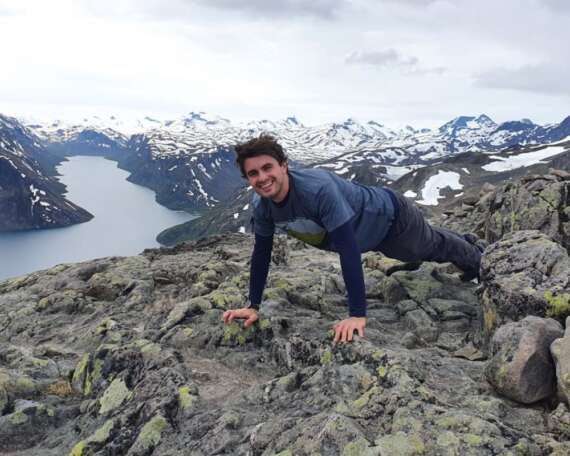
A decade on, and still evolving
2026 marks ten years of The Push-Up Challenge – and it’s grown far beyond what it started as.
In 2025 alone, more than 232,000 people took part, completing over 328 million push-ups and raising more than $12.4 million. Since its launch, the challenge has now engaged over a million Australians.
But the scale isn’t really the point. If anything, it’s still the small moments that define it.
A chef convincing their whole team to join in. A hotel front desk staffer quietly doing reps in the back room. A group of friends turning it into a nightly ritual with a bit too much laughter and not enough form.
It’s not about doing it perfectly. It’s about doing it together.
How to get involved
The Push-Up Challenge runs from 3 to 26 June 2026 and is free to join. You can take part solo, build a team, or bring your workplace along – whether that’s a restaurant, bar, café, hotel, gym or office.
For hospitality especially, it’s less about adding something extra to an already full plate, and more about reframing what connection at work can look like.
Because sometimes, the simplest movements – a push-up, a pause, a quick check-in – are the ones that land the most.