
As anyone who has fallen victim to an awkward autocorrect (I’m going to duck the meeting, anyone?), a few letters can make a huge difference. Especially for millions of women who have long suffered with PCOS – four letters that have shaped years of confusion, frustration, and in too many cases, feeling unheard in a medical system that did not quite connect the dots.
Thank you for reading this post, don't forget to subscribe!Now, a major global shift is underway. Polycystic ovary syndrome, long known as PCOS, is being renamed PMOS, or polyendocrine metabolic ovarian syndrome. And while it may sound like a technical adjustment, experts say it could fundamentally change how this condition is understood, diagnosed and treated.
For many women, that change cannot come soon enough.
PCOS is one of the most common hormonal conditions worldwide, affecting around 1 in 8 women, or more than 170 million people globally. Health experts often diagnose it during the reproductive years, and it shows up in deeply personal and sometimes distressing ways, including irregular periods, acne, excess hair growth, weight changes, fertility challenges and fatigue. Despite how common it is, people have long misunderstood the condition at a structural level.
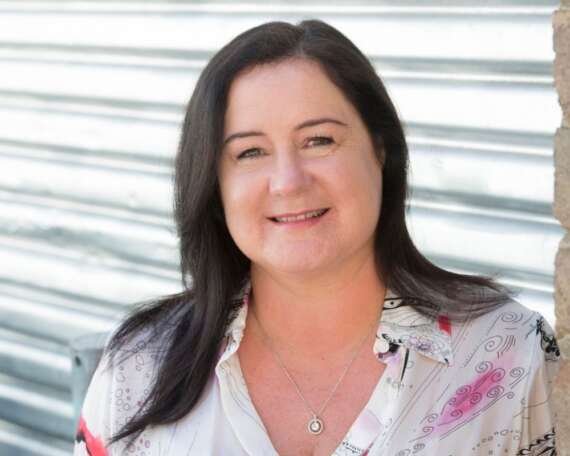
That misunderstanding, according to Dr Raewyn Teirney, fertility specialist and gynaecologist in practice with IVF Australia, starts with the name itself.
“The old name was honestly always a bit of a misnomer and those of us who’ve been working in this space for a long time have known that for years,” Dr Raewyn explains.
She goes on to break down one of the biggest misconceptions. “Polycystic ovary syndrome pointed you straight at the ovaries and implied the whole story was about cysts. But the cysts aren’t really cysts at all, they’re follicles, small fluid-filled sacs that are a normal part of ovarian anatomy. They aren’t painful, they don’t need to be removed and they’re not what’s actually driving the condition.”
That distinction matters more than most people realise. Because when a name focuses attention in the wrong place, it can quietly shape everything that follows, from the tests a doctor orders to the referrals a patient receives.
What PMOS is trying to do is correct that direction.
Rather than centring the ovaries alone, the new name reflects a broader, whole-body hormonal condition. Dr Raewyn explains that what actually drives the condition is far more complex than previously captured in the old terminology.
“What drives it is hormonal. We’re talking about elevated androgens, insulin resistance, disruptions across multiple endocrine systems. These are effects that reach far beyond the ovaries and touch weight regulation, blood sugar, skin, mood, cardiovascular health and more. The new name, polyendocrine metabolic ovarian syndrome, finally reflects that reality.”
The inclusion of the word polyendocrine is particularly significant. It acknowledges that multiple hormonal systems are involved. Metabolic brings attention to how the body processes energy and blood sugar. Ovarian still plays a role, but no longer carries the weight of the entire condition.
For patients, this shift is not just linguistic. It is practical.
Dr Teirney says, “For the people living with this condition, I think it means a lot – even if on the surface it looks like just a couple of letters shifting around. For too long, the name reduced a complex, long-term hormonal disorder to a misunderstanding about cysts and a focus on the ovaries, which contributed to missed diagnoses and inadequate treatment. That’s people spending years being told something vague about their ovaries and leaving appointments without the full picture of what was actually happening in their body.”
Behind the new name is more than a simple rebrand. It is the result of more than a decade of global collaboration, involving over 22,000 people across six continents and 56 patient and professional organisations. The goal was to create terminology that reflects the full biological reality of the condition, not just the most visible or historically emphasised part of it.
And that matters, because words in medicine do not stay in textbooks. They influence real-world care.
“The new name directly addresses those shortcomings by reflecting the condition’s hormonal complexity and acknowledging its strong metabolic and cardiometabolic effects,” Dr Raewyn says. “In practical terms, I’d hope this means faster diagnoses, more joined-up care – not just a gynaecologist on one side and an endocrinologist on the other, but a genuine whole-body approach – and less of the stigma that came from a name that made the condition sound far simpler and more narrowly focused than it ever was.”
Part of what makes PMOS such a powerful reframing is that it also shifts how women see their own diagnosis. Instead of a label that feels fragmented or misleading, it opens the door to understanding the condition as interconnected, systemic and dynamic.
Dr Raewyn is also careful to address the emotional weight that often comes with long-term hormonal conditions. She emphasises reassurance and reframing, rather than fear.
“I don’t want women to feel confused or there is anything wrong with them. It’s a very common condition and it is manageable.”
She also introduces a perspective that may surprise many patients who have only ever heard PCOS discussed in clinical or problem-focused terms.
“I think of it as these women having an evolutionary advantage. During times of famine, women stop ovulating and stop reproducing, except PMOS women, who may continue to ovulate. It’s a survival theory. I tell all my PMOS women they’re the key to the survival of the human race. They’re so special.”
It is a reframing that does something subtle but important. It moves the narrative away from deficiency and towards biology that has adapted over time, even if that adaptation now presents challenges in a modern context.
To understand why the renaming matters so deeply, it helps to see how much the terminology actually shapes care.
Dr Raewyn explains, “PMOS – polyendocrine metabolic ovarian syndrome – tells you something completely different. ‘Polyendocrine’ tells you this involves multiple hormonal systems. ‘Metabolic’ tells you it affects how the body processes energy, blood sugar and weight. ‘Ovarian’ acknowledges the ovaries are involved but doesn’t pretend they’re the whole story.”
She adds a crucial insight that resonates across women’s health more broadly. “Words matter in medicine. The name of a condition shapes how GPs screen for it, how specialists treat it, how researchers fund it and how patients advocate for themselves. A name that accurately describes what something is gives everyone a better chance of getting it right.”
This is why the worldwide renaming process has been so extensive. Global health bodies are not simply rolling this out as an isolated rebrand; they are coordinating the update and integrating it into clinical guidelines, medical education and international disease classification systems. The aim is consistency across countries and healthcare systems, so women receive the same clarity and standard of care no matter where they are in the world.
According to Dr Raewyn, “The recategorising will include updates to clinical guidelines, medical education and international disease classification systems, ensuring the new terminology is adopted consistently worldwide.”
For women who have lived for years with uncertainty, the message is ultimately one of validation.
“The condition hasn’t changed. The medical world has finally found language that does justice to what you’ve been experiencing. We can start treating women holistically,” says Dr Raewyn.