Too often, when we talk about birth, we speak in statistics and survival rates — as if the only markers that matter are the Apgar score or whether the mother made it home. But in “Birthing With Trauma and Fear”, birth doula, educator and author Moran Liviani argues that what happens during and after birth can shape a woman long after the experience itself. For Moran, that understanding came from lived experience: a first birth marked by unresolved childhood trauma, fear and clinical intervention left her feeling powerless – followed by postpartum anxiety so profound, she questioned whether she would ever give birth again.
Thank you for reading this post, don't forget to subscribe!It wasn’t until her second birth, supported by a doula and guided by her own intuition, that she realised that a birth doesn’t have to be perfect to be powerful – but it does need to be connected. It needs preparation, trust, and space for the woman at the centre of it all. Her new book weaves her personal journey with stories from other women, challenging the “go with the flow” culture she says too often leads to birth trauma and calling for a return to something older, quieter and deeply human: the right to feel safe, informed and held.
Moran believes that birth isn’t just a physical act — it’s emotional, relational, sometimes spiritual — and the unspoken moments can impact just as much as the planned ones.
The extract below – coinciding with Perinatal Mental Health Week this week – asks a question she believes we’ve neglected for far too long.
Birthing With Trauma and Fear
We ask so much of mothers.
Grow the baby. Birth the baby. Feed the baby. Love the baby. Be grateful. Be strong. Bounce back.
Rarely, if ever, do we stop to ask the simplest question: Who’s holding her?
In most modern settings, the answer is no one. Not really.
We’ve built a birth system around outcomes — stats, safety, survival.
“A healthy baby and a healthy mother.”
It sounds good. It is good. But it’s not enough.
Because pregnancy and birth are not just physical events. They’re transformations — emotional, psychological, relational, even spiritual. They shake the ground beneath a woman’s feet. And yet, we treat them like a series of appointments and protocols. The body gets care. The soul gets left behind.
Somewhere between the first scan and the postpartum check-up, the mother becomes a vessel. The baby is the priority. She’s the packaging. And in a culture that glorifies strength while ignoring pain, women are quietly praised for not needing too much.
But needing care is not a weakness. Needing to be seen, held, supported — that’s human. That’s ancient. That’s what we used to know.
Because this kind of support isn’t new. Doulas — though we use that word now — have existed for as long as birth itself. They were once the sisters, the aunties, the friends who came when labour began and stayed after everyone else had gone home. They brewed tea. They caught tears. They knew what to say when the mother said “I can’t.”
Today, they still do. Not as medical professionals. Not as miracle workers. But as a steady, unshakable presence.
A doula doesn’t deliver babies or diagnose complications. She doesn’t speak over the mother — she stands beside her. And that matters more than it sounds.
Because support like this begins long before labour. It begins in pregnancy, when the what-ifs and too-many-voices begin to swirl. A good doula doesn’t offer a checklist — she listens. She helps clear the static. She holds space for the fears that feel silly to say out loud. She doesn’t tell you what to do — she helps you figure out what you need to feel safe.
And when the time comes — when the contractions begin or the induction is scheduled — she shows up. She stays.
Birth can be beautiful, but it can also be overwhelming, clinical, fast. A doula watches the room in ways others don’t. She notices when the mother starts to shut down. She catches the shift in energy when things feel off. She’s not there to save the day — she’s there to make sure the mother never disappears inside it.
And this is what so often gets misunderstood: doulas don’t replace partners. They don’t speak over midwives. They aren’t there to take over. They create a kind of invisible scaffolding, helping everyone do what they’re meant to do — more calmly, more consciously.
But the real magic? It’s what happens after
Because this is where the silence begins — after the birth, after the texts slow down, after “How’s the baby?” quietly replaces “How are you?” When the mother has birthed her baby and is suddenly left to figure out who she is now.
This is the moment when care should deepen — and yet, it so often disappears.
Postpartum care, as it stands, is a gaping hole. A six-week follow-up. A pat on the back. A cultural shrug. And meanwhile, women are bleeding, unravelling, not sleeping, not coping, and not saying a word — because who would listen?
A doula listens. She comes back. She sees the tears that surface when the visitors leave. She recognises the quiet signs of depression that don’t make it into words. She helps with the basics — feeding, sleeping, existing — but also with the bigger, harder questions:
Is this normal? Will I ever feel like myself again?
She reminds the mother she’s still in the story. That she hasn’t disappeared behind the baby. That being held is not a bonus — it’s a need.
We talk about maternal mental health, but usually only when it’s already unravelled. Doulas are not the fix. But they are part of the foundation — the kind of presence that can soften the landing, stop the spiral, and sometimes, prevent the wound altogether.
So no, doulas aren’t a trend. They’re not luxury add-ons. They’re a return to something older, wiser, deeply human.
And maybe, in a system obsessed with outcomes and optics, that’s the most radical thing of all.
Because at the heart of it, one question remains:
Who holds the mother?
Let’s stop asking it like a whisper.
Let’s start answering it like we mean it.
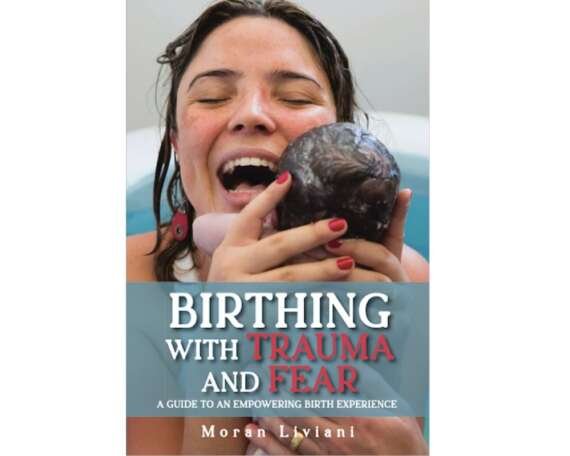
Moran Liviani is a birth doula and the author of Birthing with Trauma and Fear.