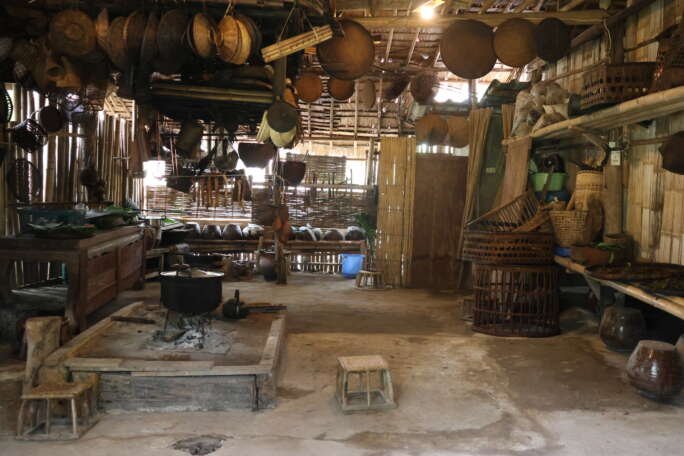
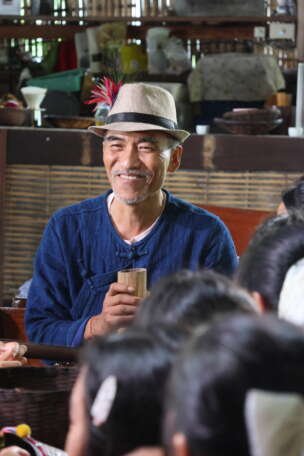
Sipping herbal tea harvested from the jungles of northern Thailand, I sit with Athu at his Akha cultural centre, perched among the rolling hills of the Golden Triangle. He speaks in broken English, his third language, wearing a black shirt and a small brown fedora. Around us, Akha tools, clothing, and ornaments fill the room, each piece telling a story of tradition, craft, and life in these remote hills.
Thank you for reading this post, don't forget to subscribe!
Photography: Kristian Smith
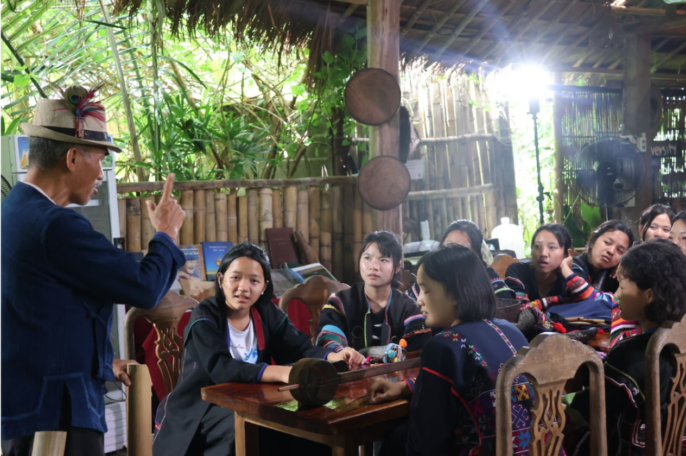
“My parents 100 percent used the way of the Akka, photographed below. I had to study in the school also, but when they do ceremony, I looking. When they cook something, I looking. They did not teach me like school, but I see what they do — learning by doing. This is all very important for the young generation. If they understand, they will care more to preserve culture.”
For Athu and for many hill tribe members, tradition is not only cultural, but practical. It is also why he believes tourism, when led by the community itself, can help protect culture rather than threaten it. This belief led him to create the Akha Cultural Centre, a place where both tourists and young Akha people learn the old ways through experience, allowing culture to be shared without being commodified. When approached respectfully, it can also sustain livelihoods.
“Preserving tradition can make money and for business,”“The way of tourists can make different life to the community. If tourists buy or make the products, e.g. baskets or sewing, this can support the community.”
Yet passing this knowledge on is not without challenges, particularly in a modern world competing for young people’s attention.
“I am sad about the Akha people, young generation don’t understand, it is oral tradition, when im thinking about the wisdom, have to remember everything in the brain, you don’t have curriculum”
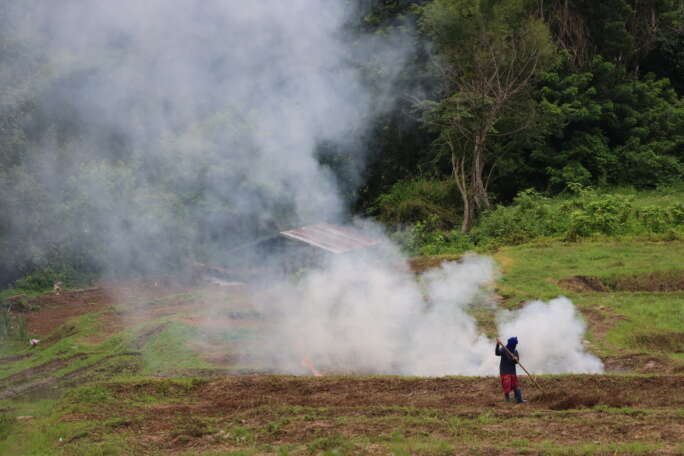
This tension plays out across northern Thailand. In the region’s highlands, the hill tribe communities are navigating how to honour ancestral ways while the pull of modern life grows stronger every year. Thailand’s northern highlands are home to diverse hill tribe communities, each with distinct languages, beliefs, and traditions. Among the largest are the Akha, known for their intricate headdresses and animist beliefs; the Karen, recognised for handwoven textiles and agricultural life; and the Lahu, whose villages sit along remote mountain ridges. Many migrated from China, Tibet, and Myanmar, settling in border regions where they maintained their cultural practices largely untouched by outside influence.
Today, shifting economic pressures, government policies, and the expansion of tourism mean these communities are negotiating how much of their heritage they can preserve and how much must adapt to survive.
While tourism is often criticised for commodifying culture, it can also play a role in preserving it. Tourism may be the very reason some traditions survive, as younger generations can share their way of life and earn money with visitors who are eager to learn.
I also saw this idea in practice with the Karen hill tribe, where I met Taksin. He grew up in Mae Tala Nuea, a remote village that only gained electricity 20 years ago. As a child, he once walked up to four hours just to reach school. With limited support, the community has faced challenges including poor infrastructure, and rising opium addiction.
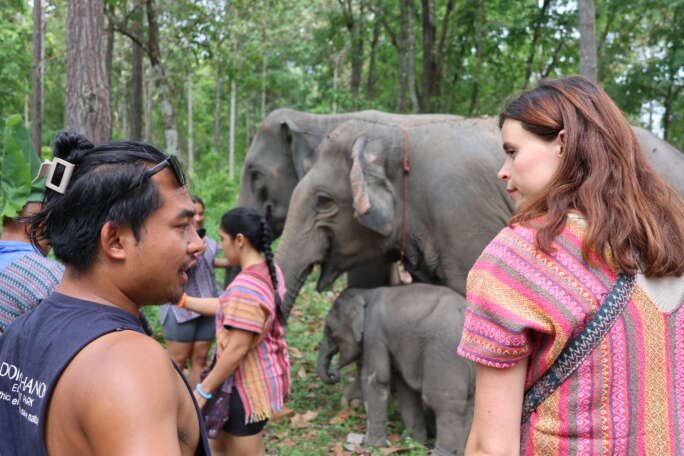
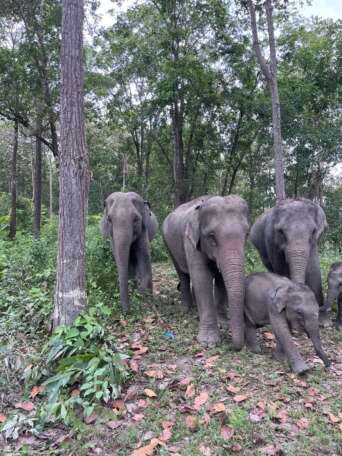
But the Karen also have something incredibly special. For thousands of years, Karen people have lived alongside elephants, traditionally relying on them for farming, forest work, and transport.
“Before the tourists came to my village, the elephant worked in the farm. Before they had tractors, all these things, they (Karen) used the elephants.”
Taksin didn’t just inherit this tradition, he adapted it. He picked up English by chatting with foreign visitors, then used his language skills and deep connection with elephants to open his own elephant sanctuary. He hired other Karen villagers and created a space where tradition and tourism work together.
“Tourists give the job and also buy stuff. When I was young, I carried the bags for the tourists because they don’t want to carry. Before, Karen didn’t have car or scooter, we carried food. We used to just grow the food for ourselves. But now we can also sell food for money to tourists and can buy new car, new house, new scooter. I see this change in my life.”
“I can speak English and I get team in the jungle who can work with elephant, so that we work together.”
Today, he dreams of bringing visitors to his home village not as a performance, but as a way to support local families and share Karen culture honestly.
Meeting Taksin, Athu, and countless others made me realise that tourism isn’t always harmful. When visitors engage with a culture respectfully, they can become part of its preservation rather than its decline. Sometimes tourism is the very thing that gives young hill tribe members the confidence, income, and purpose to keep their culture alive. For example young artisans and chefs could teach traditional skills such as weaving, basket-making, and cooking, transforming everyday knowledge into valued work. Musicians and dancers find renewed pride in ancestral songs and movements when they realise that outsiders are genuinely interested in learning, not consuming. Those with business skills help connect locally made goods to wider markets, ensuring traditions remain economically viable rather than fading under financial pressure.
By talking to Thailand’s hill tribe villagers, it became clear to me that cultural survival is intentional and when guided thoughtfully, tourism can support preservation rather than threaten it, offering travellers the chance to connect ethically and meaningfully with the people and places they visit. This looks like visitors staying in family-run homestays, sharing meals prepared by locals with local ingredients, learning a single weaving pattern or craft over an afternoon, or listening quietly as elders tell stories that have been passed down for generations. Not spectacle, but exchange. Not consumption, but connection.
Sadie Archibald is a lifestyle writer for The Carousel. Sadie recently finished a course in graphic design and is now writing for both The Carousel and Women Love Tech.