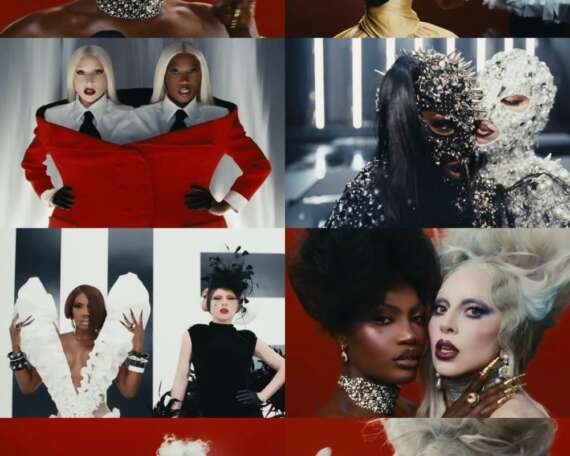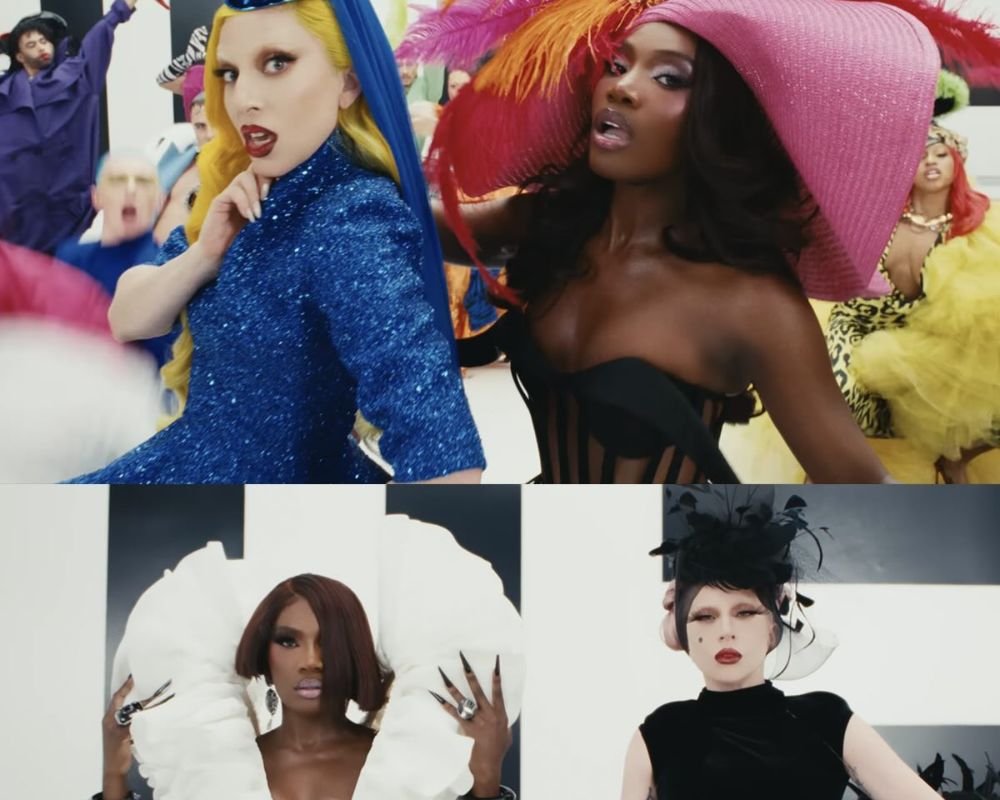
In the new The Devil Wears Prada: Runway music video, Lady Gaga and Doechii spend a lot of time in motion. Striding, posing, resetting, repeating. Much like the movie that it’s based on, the looks in the clip.- donned by Ms Meat Dress and Co – are doing just as much work as the choreography.
Thank you for reading this post, don't forget to subscribe!The styling from the song (which features in the sequel and plays during a behind-the-scenes moment at Milan Fashion Week) draws heavily on the Miranda Priestly fashion universe. Every look is structured around hierarchy, access and exposure. It is the same logic that defines red carpet dressing – where outfits are read instantly and judged just as quickly. Nothing is passive. Everything is being seen.
Gaga works within that system with precision. Clothing becomes part of performance architecture, shifting with each movement and camera cut. Doechii brings a different cadence, moving through looks with speed and instinct, resetting character through styling as much as performance. And, the result is constant visual turnover, with outfits changing fast enough that continuity has to live elsewhere. In silhouette, in detail, and in repetition.
That’s where the accessories come in. These include tights and gloves by High Heel Jungle by Aussie designer Kathryn Eisman, which are repeated across different looks.
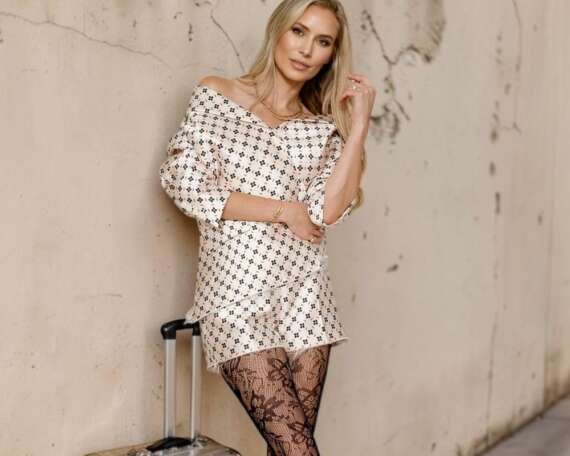
It’s a small detail in a production built on excess, but it’s one that holds. And as a result, Runway sits inside a current fashion cycle where runway language, red carpet spectacle and music-video styling have fully merged. Clothing is no longer designed only for still images. It’s built to move, cut, reset and repeat – to survive choreography and editing as much as photography.
That shift has been building for a while. Fashion storytelling in pop culture has moved closer to the runway itself, where looks are designed for motion rather than stillness, and where styling functions as part of pacing rather than decoration. Music videos now borrow directly from editorial and couture presentation, collapsing the distance between front row spectacle and screen performance. The result is a visual language where garments are no longer framed as static outfits, but as moving systems of image-making.
Within that framework, red carpet logic still lingers in the background. The idea that a look must land instantly, read clearly, and withstand scrutiny from every angle has simply migrated into faster formats. Instead of a single photograph, there are now sequences, edits and repeated exposure across platforms. Clothing has to hold up under movement, not just arrival.
Gaga and Doechii operate naturally within this space. Gaga builds looks as extensions of character, often treating styling as part of narrative construction rather than surface design. Doechii moves differently, shifting identity at speed, using clothing changes as part of performance rhythm rather than pause points. Together, they sit within a visual system that rarely settles, where reinvention is constant and stillness is optional.