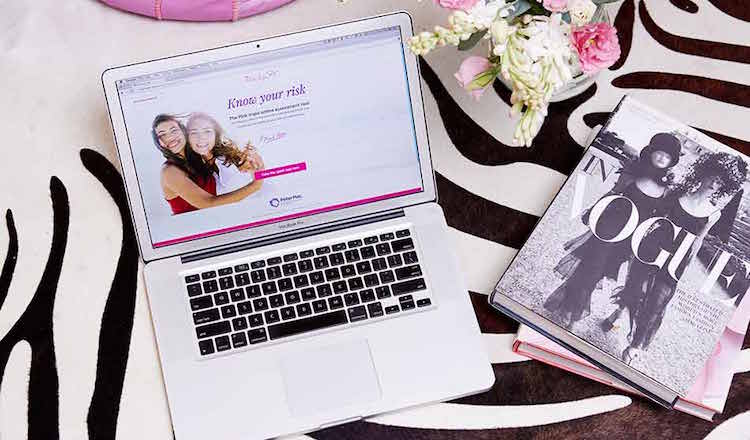
The research highlights that women are either complacent or confused about the importance of breast checks and breast health. Now, the organisation is helping women by providing on line breast check assessment tests.
Thank you for reading this post, don't forget to subscribe!The research released by Pink Hope shows:
- In the last month, less than a quarter of Australian women (22%) have checked their breasts by actively looking in the mirror for size and colour changes.
- The majority of women (60%) do no feel confident when checking their breasts.
- Close to one in three do not know what’s normal when it comes to self-breast checks.
We are never too young or too healthy or too busy to check our breasts, reduce the risk and stay vigilant. It’s in our best interest that we do. Thankfully Pink Hope has created the personal risk calculator which allows women to self-assess online.

We spoke to Lucinda Hossack, Genetic Counsellor for Pink Hope, to find out some more information.
At what age should women start checking their breast health?
Although, breast cancer is most common in women aged over 50, women of all ages are encouraged, including young women, to be breast aware. This means women being aware of what their breasts usually look and feel like, so they know what is normal for them, and knowing how to seek medical help if a woman notices something new or usual.
What are the key indicators we need to look out for?
Changes to take note of are any changes to the colour or texture of the skin, changes to the nipple, discharge from or orientation of the nipple (sudden change of the nipple pointing inwards instead of outwards), lump/s and/or areas that feel thick.
Who is most likely to be at risk?
All women have a risk of breast cancer, for most women they have a 12.5% chance (risk) of developing breast cancer over their lifetime. There are lifestyle and non-lifestyle factors that increase a woman’s risk of breast cancer. It is important for all women to have a conversation with their GP about their breast cancer risk.
One in 20 Australian women have a risk of breast cancer that is higher than the average woman’s (12.5%) risk. Women with a higher risk may be recommended to have breast cancer check-ups at younger ages and/or at increased frequency than the average woman. Having a family history of breast and/or ovarian cancer on either your mother or father’s side of the family, a known breast cancer gene alteration in the family, a past history of certain benign breast changes known to be associated with an increased risk of subsequent development of breast cancer and/or lifestyle factors are all known to increase a woman’s breast cancer risk.
Is there anything we can do to reduce our risk?
Yes, there are ways to reduce the risk of breast cancer which women of all ages and risk categories can do. Carrying excess weight and weighing more than your healthy weight range can increase your risk of breast cancer as well as other common health conditions. Carrying more weight, in particular as we age, seems to increase a breast cancer risk. Eating well and exercising can help women to maintain a healthy weight range. Some people need more help than others to reach and/or maintain a healthy weight; local doctors can be a great source of support in helping to support women to achieve their weight goals.
Regular moderate exercise has also been shown to reduce the risk of developing breast cancer by around 10%, independent of weight loss.
Avoiding more than the standard alcohol consumption can help to reduce the risk of breast cancer. Alcohol is known to increase the risk of various types of cancer including breast cancer. Currently the recommendation is to have less than 2 standard drinks per day and 4 on any one occasion. So keep a watch on how much alcohol you drink and if it is more than the recommended levels work towards reducing it so you can cut your cancer risk.
Avoiding long-term hormone replacement therapy (HRT), as doing so avoids increasing a risk of breast cancer risk.
For women who have an increased risk of breast cancer, there are also medications and/or surgery that can reduce the risk of breast cancer.
How often should you check your breast health?
There is no recommended set frequency for checking breasts; rather women are encouraged to maintain a regular breast awareness. Some women find it helpful to check their breasts on a particular day of the month, of after their period as way of forming a habit and making sure they are maintaining a regular check. Often changes might be noted through everyday tasks such washing or dressing.

What’s the risk calculator designed to do?
The Know Your Risk tool is designed to help women, who have never had breast cancer, assess their family health history to determine whether it increases their personal risk of breast and/or ovarian cancer. Assessing a woman’s family health history is the first step in then determining what steps she can take to manage and/or reduce their breast and ovarian cancer risk. The tool provides advice about whether women need to seek specialist medical advice about their family health history or seek advice from their GP about how best to manage their breast and/or ovarian cancer.
If women know their personal risk for breast and/or ovarian cancer, seek medical advice on the appropriate options to reduce and/or manage their cancer risks and acts on that advice, they are actively moving towards either avoiding a cancer diagnosis or making sure a cancer is detected at an early stage.
Tell us more about Pink Hopes objectives and goals.
Pink Hopes mission is to move towards the prevention of hereditary breast and ovarian cancer whilst providing personalised support to women as they navigate their at risk journey. Pink Hope does this through raising awareness and in offering women a comprehensive range of programmes and resources to help women assess, manage and reduce their risk of developing breast and ovarian cancer risk. Women can also find support from the Pink Hope team and Pink Hope community through engaging in peer support programmes.
Click here to take the Pink Hope Assessment Test.
*The recent study was orchestrated by Galaxy Omnibus ‘Australian Women Breast Intentions Questionnaire, May 2016. Conducted with 500 women aged 18+.