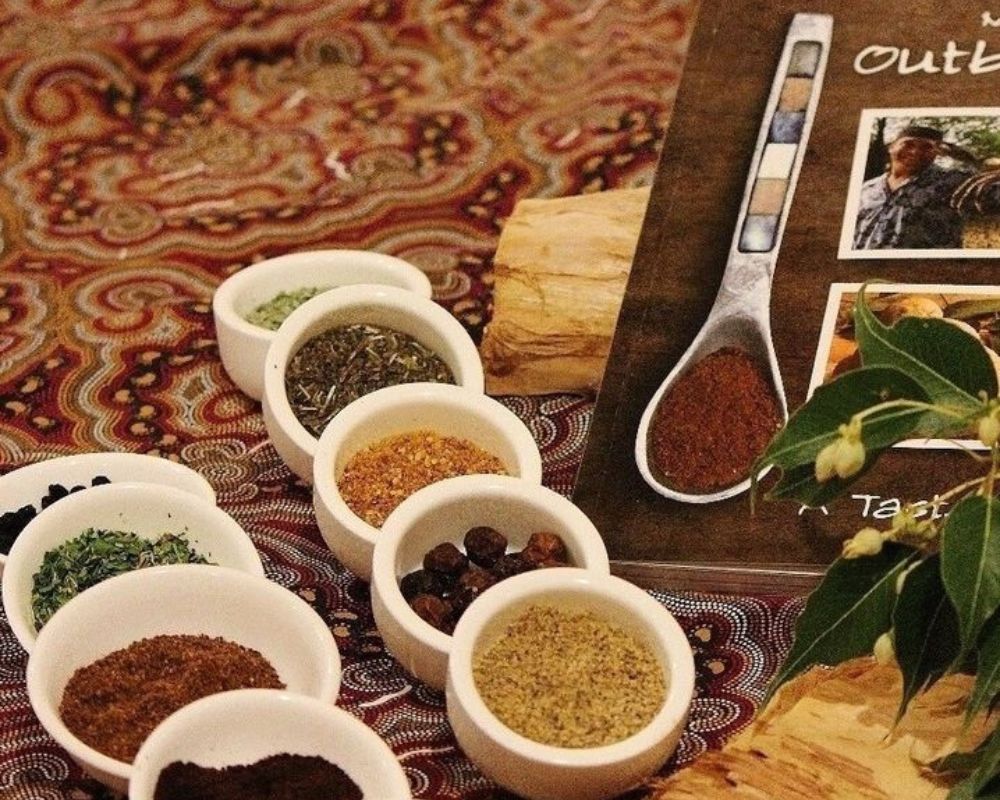
Foraging for native ingredients and Aussie bush foods is a wonderful way to connect with the land and bring traditional Indigenous cuisine into your kitchen. However, it’s essential to approach this practice with respect and knowledge. As renowned Indigenous chef Mark Olive, also known as “The Black Olive,” emphasises, “When it comes to bush tucker foraging, it’s all about connection to Country. You really want to be guided by local Aboriginal knowledge. We’ve known for thousands of years which plants are good for a feed and which ones you should steer clear of.”
Before setting out to forage, it’s important to understand the rules and responsibilities that come with it. In Australia, a licence is required to legally forage, and this regulation exists to protect the land and its resources. As Mark explains, “Foraging’s a bit tricky these days. In Australia, you actually need a licence to legally forage. And, that’s to protect the land and ensure future generations can still enjoy it.”
Keeping it close to home
While wild foraging for native ingredients can be an incredible experience, it’s not the only way to access bush tucker ingredients. Mark suggests foraging closer to home by growing native plants in your garden. “Instead of picking as you go, why not forage in your own backyard? You can grow some incredible bush tucker at home. Native herbs, fruits, and veg are perfect for a pot or garden bed,” he says.
If gardening isn’t your strong suit, don’t worry – native ingredients are increasingly available at grocers and even featured on restaurant menus. You can also join a bushfood cultural tour with local Aboriginal guides, who can show you how to forage sustainably and responsibly.
Common mistakes to avoid
One of the most common mistakes beginners make when foraging for native ingredients is failing to properly identify plants. Foraging requires careful attention, as some plants can be toxic or easily confused with edible ones. Mark’s advice? “Be guided by local Aboriginal knowledge,” as the expertise passed down through generations ensures that the right plants are harvested safely and sustainably.
Four native ingredients to try
To get you started, here are four of our favourite native ingredients that are both accessible and versatile in cooking:
1. Saltbush
Saltbush is a robust, resilient plant that thrives in Australia’s harsh conditions. “Indigenous mob have used it for ages, and it’s still going strong today,” says Mark. Its leaves have a salty, earthy flavour that works well with roasted meats or in salads. You can also dry and grind the leaves to make a unique seasoning, or fry them in batter for a crunchy snack. Saltbush’s versatility and flavour make it a must-try for beginner foragers.
2. Lemon Myrtle & Aniseed Myrtle
Lemon myrtle brings a fresh, citrusy zing to dishes, while aniseed myrtle offers a subtle, sweet liquorice flavour. These two bushfoods are staples in modern Australian cooking. “If you’ve ever tasted Lemon Myrtle, you’ll know it’s like a burst of the bush in your mouth,” says Mark. Both ingredients are perfect for marinades, teas, or finally, even desserts. They’re easy to incorporate into everyday cooking, adding layers of flavour without much effort.
3. River Mint
River mint, a relative of spearmint and peppermint, has a distinctively Australian twist. It’s been used for centuries in Aboriginal communities for both culinary and medicinal purposes. “It’s a fresh and delicate herb that works in so many dishes – think sauces, salads, roasts, or even some drinks – for example, a cheeky cocktail,” Mark notes. You can use river mint fresh or dry it for later, but the flavour is best enjoyed while the leaves are fresh.
4. Sea Parsley
Sea parsley is a coastal native herb with a salty, celeriac-like taste that complements seafood perfectly. Mark describes it as “like regular parsley but with an edge.” It can be used in place of traditional parsley in a variety of dishes, bringing a taste of the Australian coast to your meals.
Happy foraging. And happy Barramundi Day!
One of the best ways to experience the unique flavours of these native ingredients is by trying Mark’s Native Aussie Herbed Barra Skewers recipe this National Barramundi Day. The skewers are a perfect showcase for native herbs like saltbush, lemon myrtle, and river mint, bringing out the natural, delicate flavour of the barramundi. As Mark says, native ingredients “give you a whole lot of flavour without too much fuss.” And, his recipe is a brilliant example of how easily bush tucker can be integrated into everyday cooking.