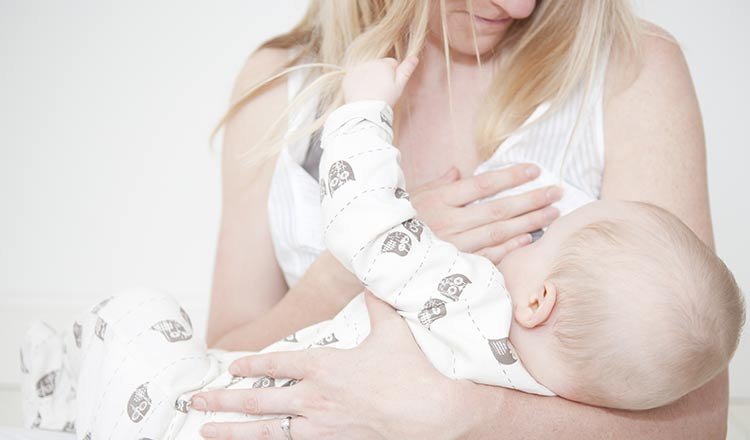
Hugs feel good, really good. Oh who are we kidding, all touch is down right wonderful! But, it doesn’t just feel good, touch is also the very first language we learn, the first sensory system to develop, and along with food and shelter, is the most essential ingredient for a baby’s development, health and wellbeing.
The human brain is a social organ, and a newborn baby develops in the context of their relationships. Alice Campbell, CEO of International Association of Infant Massage (IAIM), says researchers call this “serve-and-return” – which are simple interactions and conversations back and forth between babies and their parents, over and over countless times each day. While this might seem pretty basic, these serve-and-return interactions actually shape the basis of all social, emotional and mental health development because these are crucial interactions that wire our brain circuits. Babies’ brains are highly, highly responsive and serve-and-return experiences form the architecture of the brain in areas that will, ultimately govern our children’s social interactions, mental health and coping skills, problem-solving, and even cognitive skills and academic performance [1].
And touch, as it turns out, is one of the most important elements of healthy serve-and-return interactions. But don’t just believe us – here’s some science to back it up. One study found that the use of touch while talking to a baby significantly increased vocabulary development [2]. MRI studies have shown that a parent’s use of gentle touch and other nurturing behaviours directly impacts on brain size and volume [3], particularly in those areas of the brain associated with our patterns of emotion and social interaction [4]. Animal studies have even shown that parents’ touch behaviours can even switch off genes which predispose for things like opiate addiction or mental illness – amazing. Here’s Alice;
‘What this means is that nurturing touch is not merely something that is a nice thing to do, but provides the matrix around which all early brain development occurs. In other words, brain development is a response to our relationships, and the way that babies understand these relationships is, largely, through touch.”

There is literally decades of Harvard research to back up what comes innately to (most of) us – touch. Neglect, not just in the form of malnourishment or poor living conditions, but in the form of lack of touch “is awful for the brain”, says Charles Nelson, a professor of paediatrics at Harvard Medial School and Boston Children’s Hospital. And this is backed up by a decade of research on children raised in institutions showing that without someone who is a reliable source of attention, affection and stimulation “the wiring of the brain goes awry”, Nelson says. The results? Not just detached adults lacking the ability to show emotion or affection, but actually this type of neglect can lead to long-term mental and emotional problems.
Sound convincing? Let’s look at the data. Most of what scientists and researchers know about parent-child bonding and the brain stems from studies of children who were ‘raised’ in orphanages or who were ‘looked after’ in poor-quality day-care centers during the 1980s and 1990s. Mary Carlson, a neurobiologist, also from Harvard Medical School, conducted a range of research with over 100,000 children who were trapped in these institutions during the reign of Romania’s repressive and brutal government, until it was overthrown in 1989. Among other fascinating and saddening findings, Carlson concluded that the lack of touching and attention had significantly stunted the growth of these children and adversely affected their behaviour resulting in a range of mental and emotional problems. Children were witnesses rocking back and forth in cribs as if they had autism, and toddlers were desperate for attention – of any kind – but when picked up and hugged they would cling on, then push away (sometimes violently) their hugger.
Strange behaviour, delayed language development and a range of other symptoms pointed clearly towards stunting in brain development. So Nelson and other researchers began measuring brain activity in these children using electoencephalography (EEG), which measures electrical activity in the brain. The results were nothing short of disturbing. “Instead of a 100-watt light bulb, it was a 40-watt light bulb” in these children, Nelson says. Several years later, when the children had grown enough to use an MRI to study the anatomy of their brains, the results were even more troubling. Nelson says, “We found a dramatic reduction in what’s referred to as grey matter and in white matter. In other words, their brains were actually physically smaller.”
What Can We Learn From All This?
Leading baby care company, Johnsons are supporting parents to just take that extra moment with their baby, to make so much more out of bath time with their little ones and most importantly – to touch, touch, touch!!! Many parents feel that picking up their baby often, is spoiling them, but this couldn’t be further from the truth. There’s no rule book for engaging in touch, massage, hugs and affection with your baby, most of it will come naturally to you and the more you do it, the greater impact it will have on the development of your child. Studies have shown that touch therapy, including massage, contributes to healthy weight gain, enhanced growth and social development in babies. Touch can mean so many things, and different things to different people, so we’ve chosen a few of the most important things you can do right now…
Skin-To-Skin Contact Rocks:
Our skin is amazing, it’s our largest organ and has the ability to not just hold us together and to protect us, but to send and receive the most incredible amount of signals – both physical and emotional. We’re all aware of the nerves that warn us against temperature and keep us safe from harm, but did you know that there’s a specific set of nerves in skin that communicate emotion?

Photograph by GM Photographics www.gmphotographics.com.au
Here’s Alice again to explain these specific nerves called C-Afferents – trust us, it’s fascinating; “These C-fibres, our social nerves, appear to only react to gentle stroking on the skin. When fired – by gentle touch – these nerves stimulate emotions of pleasure and happiness, and they also seem to communicate pleasure and happiness from the other person. As well as releasing hormones like oxytocin which help calm and soothe babies (and adults too), stimulating these nerves reduces a baby’s heart rate and increase the baby’s ability to focus their attention. And this matters. These humble little C-Fibres also appear to help babies’ brains interpret interactions from their parents as pleasurable. In other words, we love our babies. But touch is how our babies know we love them, and it is how they know we understand them. This is the basis of what child development experts call parent-child connectedness which, as one researcher put it, has emerged as a ‘compelling super-protector for the prevention of drug-use, violence, and a variety of other health and social problems'[5].”
Carrying, holding, stroking, massaging, cuddling your baby often and being touched in any loving way can help small babies grow stronger and help troubled children feel less anxious.
Won’t I Spoil My Baby? Errr…NO
It’s not uncommon for parents to believe that too much cuddling and attention will lead to ‘spoiling’ their little one. Some parents don’t pick up their babies as often as they could because they’re afraid they will spoil them, but nothing could be further from the truth! Each time you pick up your baby, you let them know that you care and that you understand their needs. Don’t hesitate to hold your crying baby. Carry them on your shoulder and sing a lullaby. Stroke their head, rub their back tenderly, and let them know you’ll always be there. Talking and singing while holding your baby can help you both to bond! And speaking of bonding…
The Importance of Eye Contact
Here’s Alice;
“Most of what we know about the importance of eye contact, comes from studies which look at what happens to babies who miss out on eye contact. Babies who miss out on eye contact tend to become very disorganised, very quickly. Their breathing and heart rate increase, they begin to vocalise and perhaps cry, and may even become so distressed they lose bowel function or vomit. Eye contact is a key strategy that baby’s use to keep their bodies in a comfortable zone, and it communicates to their brain that their parent is available. This doesn’t mean that parents and babies should be in constant eye contact all the time, but that periods of eye contact – even very, very brief ones – are extremely beneficial.”
There’s NO RULE BOOK! Learn and bond together…
Most elements of parenting come intuitively with our babies, and Alice says “it’s incredibly important to acknowledge that not every aspect of parenting needs to be formally taught or professionalised.” Touch is something that many new parents struggle with, much like breastfeeding, it might be ‘natural’ but it doesn’t always come easily for a variety of reasons. Here’s Alice;
“There are lots of reasons for this: some babies appear very sensitive to touch, or they may be very unsettled or unwell…making massage – and touch generally – difficult to work out. And as new parents, dozens of different things can impact on our use of touch: postnatal depression is a big one. But simply being a bit uncertain, feeling overwhelmed, feeling stretched for time, and our own comfort-levels with touch can also interfere with how confidently we begin using touch with our babies.”
As you spend more time with your baby, you’ll learn to read their likes, dislikes, desires and emotions. You’ll learn the best time for cuddling, the best time for playing and the best time for relaxing. If too much playing or cuddling is making your baby cranky, give them a rest and check back a little later – they’ll let you know when they’re ready for attention!
The Difference Between Mum & Dad
Men and women are different – we all know this! But the same variance extends to how parents bond with their children. Each parent has his or her own way of touching. Johnsons says that research shows that when mothers touch babies, they are usually soothing and calming. Mums most often touch gently – they stroke softly, rock slowly, and hold their babies tenderly. Dads, on the other hand, tend to engage in more physical forms of touch – they bounce babies on their knees, hold them playfully in the air, or roll around on the floor with them. Dad’s can tend to be more playful, where Mums can be more nurturing. Both are great!!! Your baby benefits from these two different styles of touch. Together they contribute to your baby’s healthy development, and teach them different ways of bonding.
Sense something not quite right?
Touch and bonding with your baby is intrinsic so if you sense that you don’t have the energy or the motivation to bond with your little one, talk to your doctor. You may be suffering from postpartum depression, a physical condition for which there is help. Don’t think “it’s all in your head” and don’t go it alone. It’s important – for both your sake and your baby’s sake – that you seek help. Around 20-30 per cent of new mums experience this, and the incidence of ‘subclinical’ – or not quite reaching the official threshold of diagnosis – is probably much, much higher. So speak up.
For more research and great information about the importance of ‘touch’ in your baby’s development visit Johnsons
- [1] National Scientific Council on the Developing Child, 2004.
- [2](Seidl, et al, 2015)
- [3](Lezin, et al., 2004)
- [4](Luby, et al., 2013)
- [5](Paggliaccio, et al., 2015)