Cultivating plants for pleasure is not new. Around 600 BCE, the fabled Hanging Gardens of Babylon were one of the earliest written records of a garden created purely for its aesthetic beauty rather than the necessity of growing food.
Thank you for reading this post, don't forget to subscribe!The story goes that King Nebuchadnezzar II commissioned the gardens for his wife, Queen Amytis, who missed the lush greenery of her home in Persia. What a guy!
The resulting gardens resembled the verdant mountains of her birthplace, filled with olive, quince, pistachio, pear, date and fig trees. Mysteriously, even though the Hanging Gardens are one of the Seven Wonders of the Ancient World, their exact location has never been discovered, and with conflicting accounts about their origin and no archaeological proof of their existence, these gardens may always remain a beautiful myth.

There are, however, well-documented accounts from Ancient Egypt, Greece and Rome of wealthy citizens tending to plants in their sprawling estates, either indoors or in their courtyards, often with a focus on edible and flowering species. Over in Asia, the art of Bonsai, where small trees are cultivated to mimic the shape and scale of full-size trees, began in China between the second and fifth Centuries CE.
In Europe, the popularity of houseplants is thought to have declined after the fall of the Western Roman Empire in the 5th century CE until the start of the Renaissance in the late 14th century when they came back into vogue in a big way.
As European countries ravaged and colonised the Americas, Africa, Asia and Oceania, they also brought back with them botanical specimens for the purposes of growing food, scientific study, commercial production and display. The rich began to showcase their wealth by growing plants in orangeries (early greenhouses), which allowed citrus as well as other tropical plants to be grown in colder climates.
But while the wealthy have long enjoyed the pleasure of houseplants, it wasn’t until the 19th century that the pursuit spread to the middle classes. As increasing numbers of tropical and subtropical plants were imported from across the globe, the fashion for houseplants peaked. Aspidistra, for example, described by British botanist John Bellenden Ker Gawler in 1822, was introduced to the UK where it earned the common name ‘cast-iron plant’ because it was capable of surviving in even the darkest of homes.
As glass became more readily available, conservatories began popping up in English gardens, and by the 20th century, advances in lighting and heating allowed for an even greater variety of plants to be grown indoors.As with all things, the popularity of indoor plants has waxed and waned. The start of the 20th century saw a shift in attitudes as modernity entered the home and the plant-filled interiors of Victorian England seemed decidedly old-fashioned.
The architectural forms of cacti and succulents fitted more appropriately with the style of the day and their appeal grew. By the end of World War II, there was again a proliferation in the popularity of indoor plants as they livened up the often drab and sterile workplaces of the time. These hardy plants, tolerant of low-light conditions, soon migrated to homes where people were increasingly living in apartments.
This, along with the rise in popularity of Scandinavian design, including the Swedish passion for indoor plants, such as the Swiss cheese plant and lush Boston fern, saw yet another revival in the 1970s. Fast forward to the 2020s and houseplants are, once again, back in the limelight where they rightly belong. Recent studies have shown that houseplants increase concentration, productivity and general well-being, meaning that hopefully they are here to stay, as we learn to appreciate the huge benefits of living with greenery.anoteonthehistoryofbotany
In addition to acknowledging the often white, Western role in the world of botany and horticulture, we feel a greater discussion is needed about the ways in which the science was established, often at the detriment of First Nations people. In the pursuit of cultivating economic crops for empire building, local inhabitants were often exploited for labour, and their history and knowledge of local botany was ignored or erased.
Despite the language commonly used by many of us, it stands to reason that European botanists were not the first to ‘discover’ certain plants, rather they were the first to record them using Western methodologies. This is indeed a complex issue, and there is a lot of learning to be done within the industry to address the history of many national botanical collections around the world. We all need to educate ourselves about the true narrative and listen more deeply to First Nations people in an effort to make the world, and our plant-loving community, a more equal place.
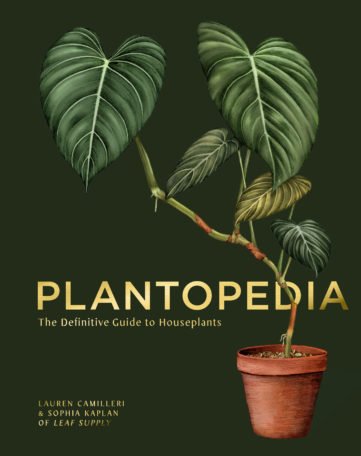
Extracted from Plantopedia by Lauren Camilleri and Sophia Kaplan of Leaf Supply. Published by Smith Street Books, RRP $59.99.