Annie Leibovitz has spent decades shaping how the world sees women — not as symbols or stereotypes, but as full, complex human beings. Her acclaimed Women series, which began in 1999 at the suggestion of her late partner, writer and activist Susan Sontag, remains one of the most significant and evolving visual records of female achievement today.
Originally featuring icons such as Michelle Obama, Aung San Suu Kyi, and Amy Schumer, the project has grown into an ever-expanding archive of women who influence culture, politics, science, sport and the arts. From the late Jane Goodall to Adele, Misty Copeland to Gloria Steinem, the series reflects the rich diversity of women’s experiences and the power of women’s voices.
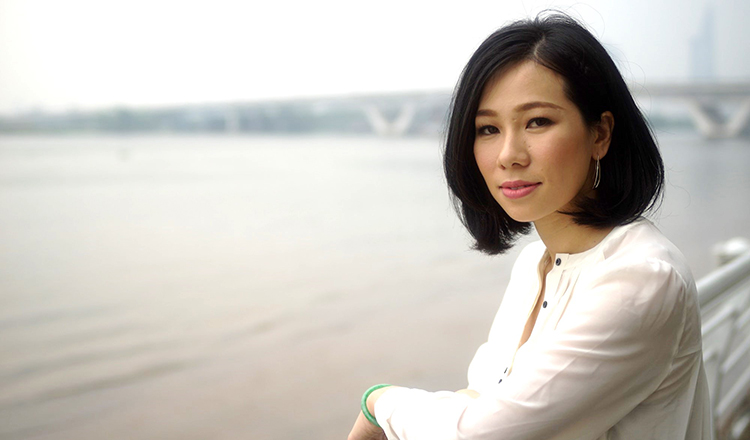
What makes Annie’s portraits so resonant — and so celebrated — is her commitment to truth. She famously strips away the layers of stylists, sets and spectacle, choosing instead to photograph women as they are. “What I love to do with my work is show what women do,” she once said. And that intention pulses through every image.
In her exhibitions, the portraits are presented almost like living stories rather than gallery pieces — raw, immersive and democratic. As Annie has explained, the project has no hierarchy: the frame of a world leader can hang next to that of a homeless woman. What matters is the story, the humanity, the contribution.
Gloria Steinem captured the essence of this when she said, “Each one of these photographs is a novel… a complete human story.” Annie’s lens doesn’t merely capture a likeness — it captures legacy.
Her access to some of the world’s most influential women has also made history. She became the first American photographer to photograph Queen Elizabeth II at Buckingham Palace, returning to the strength and vulnerability behind one of the world’s most photographed figures. She has long hoped to photograph women like Angela Merkel in their everyday work — a testament to Annie’s belief that power isn’t always found in the spotlight, but in the quiet, relentless act of showing up.
More than two decades on, Women continues to evolve as Annie seeks out new voices, new faces and new definitions of what leadership and influence can look like. “It’s a story that’s never going to have an end,” she has said — and that’s exactly what makes the series extraordinary.
Today, Annie Leibovitz stands not just as one of the world’s most celebrated photographers but as a champion of women everywhere. Through her portraits, she honours their achievements, their struggles, their individuality and their collective impact. Her work reminds us that every woman has a story worth telling — and worth seeing.