If you’ve ever had acupuncture — or even just seen the tidy diagrams mapping invisible lines across the human body — you’ve probably wondered whether meridians are grounded in physiology or floating somewhere closer to mysticism. In a wellness landscape where scepticism and curiosity often sit side by side, the question feels fair. Are meridians an ancient metaphor, or do they actually matter?
According to Chinese Medicine practitioner at The House of Life, Dr Marina Christov — who brings more than two decades of clinical experience and academic training to the conversation — dismissing them outright misses the point entirely. With two Health Science degrees from Victoria University, clinical training in China, and a career spanning teaching, research representation, and founding her own wellness clinic, her perspective blends grounded clinical insight with deep respect for tradition. Her work centres on what she calls a “root cause holistic approach,” treating underlying imbalances rather than surface symptoms. And, when she talks about meridians, she does so in terms that feel far from mystical hand-waving.
The Body’s Invisible Web
For those unfamiliar with Traditional Chinese Medicine (TCM), she explains the concept with striking clarity. “In Traditional Chinese Medicine, meridians can be understood as the body’s internal web of communication. They are the pathways through which your life force, the subtle energy called QI along with Blood and fluids, travel to nourish every part of you.” Instead of separating anatomy into distinct compartments, the meridian model presents a system of constant interaction. “Rather than seeing the body as separate organs and systems, meridians show how everything is connected. And constantly ‘talking’ to everything else.”
To make the idea tangible, she reaches for analogy rather than abstraction. “Perhaps, a helpful way to picture this is like the World Wide Web. Just as the internet links pages, information, and people across the globe through these invisible connections… meridians link your organs, tissues, emotions, and mind through an unseen network inside the body.” The structure is invisible she says, but its function is evident. “You can’t see the web itself. But you clearly see what happens when the connection is strong and when it drops out.”
She offers another visual that feels equally accessible. “Another analogy is like a river system. Imagine a landscape fed by flowing rivers and streams. When the water moves freely, the land is fertile, alive, and balanced. But if a river becomes blocked or stagnant, the surrounding land begins to suffer.” This image speaks directly to health outcomes. “In the same way, when meridians flow smoothly, you feel your body working in harmony. You are well, calm, pain free and energised. When the flow is disrupted, symptoms like fatigue, tension, emotional distress and specific symptoms can appear.”
When Flow Gets Stuck
That disruption is central to how TCM interprets imbalance. “A blocked meridian is like a traffic jam within the body,” she explains — energy failing to move along pathways connecting organs, muscles, and emotional states. The consequences vary depending on which pathway is affected. “If the Liver meridian is blocked, you might notice tight shoulders, headaches, irritability, period irregularities or digestive discomfort. If the Stomach or Spleen meridians are sluggish, you may feel bloated, heavy, foggy or constantly tired. And, if the Heart meridian is unsettled, it can show up as poor sleep, anxiety, restlessness and even disconnection from others and inability to feel joy.”
Science, Structure and a Sceptical Western Lens
From a Western biomedical standpoint, the obvious question remains whether these channels can be physically observed. Dr Marina is candid. “Unlike the nervous or circulatory systems in Western medicine, meridians are not physical wires that can be dissected. They are more like the organising currents that guide how vitality and information move through the body.” Yet, she also points to emerging overlap between ancient mapping and modern observation. “In recent years, modern research has found links between meridian pathways and fascial lines, electrical conductivity and connective tissue networks. This suggests there is a physical basis to what ancient practitioners mapped thousands of years ago.” Studies exploring electrical resistance at acupoints and brain imaging responses to targeted stimulation reinforce this curiosity-driven space between science and tradition. “This suggests that these mapped points are not coincidental, and that the body recognises and responds to them in a meaningful, measurable way.”
Her optimism about future technology is unmistakable. “So while meridians are often described as ‘energetic,’ they are very real in their effects… I also believe that the time will come where technology will allow us to observe and directly measure the energy input of our meridians! I am so looking forward to that!”

Everyday Ways to Support Balance
Practical application — rather than theory — is where many people encounter the concept. “Keeping meridians balanced is less about doing many things and more about doing the right things for your individual pattern,” she says, emphasising personalised care. Professional diagnosis matters because “what helps one person may not help another if the underlying pattern is different; after all we are all individuals.” Still, she points to accessible habits that support general flow: stretching, emotional release, mindful breathing, nourishing meals, tea rituals, and reducing overstimulation.
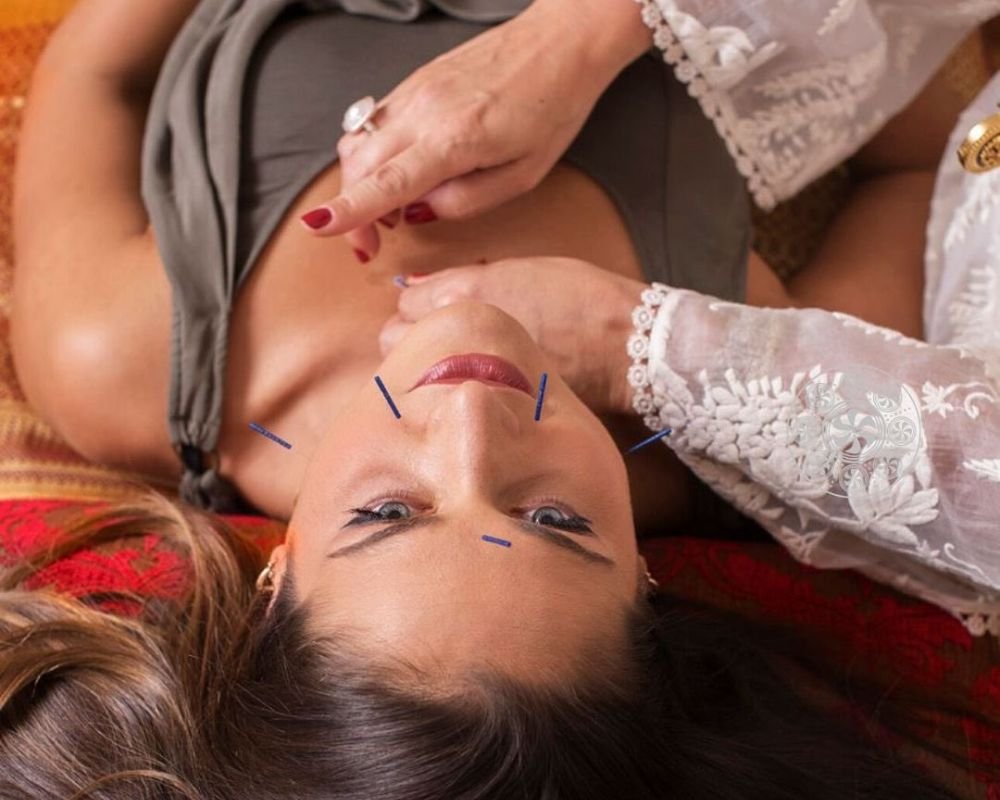
Acupuncture and acupressure sit at the heart of intervention. “Specific points along these pathways act like access points to the body’s internal network. By stimulating them, blockages can be cleared, flow restored and communication between organs and systems improved.” She observes that “after a good treatment, almost instantly patients notice feeling calmer, lighter or more energised because the body is no longer working against resistance.” Movement practices contribute too. “Practices such as Tai Chi and Qi Gong are often described as a ‘moving meditation’ because they are specifically designed to guide Qi through the meridians… The slow, intentional movements help open pathways, release tension and encourage a smooth even circulation of energy throughout the body.”
Tradition Meets Modern Medicine
Even within Western healthcare, crossover is increasing. “Many physiotherapists, pain specialists, sports medicine clinicians and some general practitioners use acupuncture or dry needling,” she notes — often indirectly interacting with meridian pathways — though she stresses that true diagnosis “should be done by someone properly trained in TCM theory.”
Her personal fascination with energy systems traces back decades. “From a very young age, I was exposed and fascinated by Nikola Tesla’s ideas about energy and vibration… That curiosity naturally led me to TCM, which offers a practical, living system for understanding how energy moves through the body. I love the interconnectedness that underpins the philosophy.” Clinical outcomes reinforce that conviction. She recalls patients experiencing near-immediate shifts. “The body responds quickly when blockages are released, like opening a dam and letting the river flow freely.”
Let Experience Lead
And for those still unconvinced Dr Marina’s invitation is disarmingly simple. “If someone was sceptical, I would say, try something that you have never done before, you might be pleasantly surprised. Even without fully ‘believing’ in something like energy flow, allow the effects to speak for themselves.”
Meridian theory may remain difficult to measure in purely anatomical terms, but its clinical relevance and cultural longevity keep it firmly in the conversation. Perhaps the real takeaway isn’t whether it fits neatly within Western frameworks — but whether its outcomes prompt us to reconsider how we define evidence, experience, and the many ways the body communicates beyond what we can see.