Ilona Marchetta is The Carousel’s Sustainability Editor and a Change Management practitioner specialising in climate change communications. Here she weighs the evidence against popular misperceptions about global warming and explores catalysts for behaviour change.
A global study of more than 15,000 people conducted by electronics giant Epson has revealed a very remarkable perception towards climate change.
Almost half of all respondents stated they were “very” or “somewhat” optimistic that a climate crisis could be averted within their lifetime.
This is remarkable because most parts of the world have declared a climate emergency, and some parts are experiencing a climate crisis right now.
In August 2021, the UN’s Intergovernmental Panel on Climate Change delivered what the UN chief described as a ‘code red’ for humanity, with a report that outlines the high probability of extreme drought, precipitation deficit and water stress if the globe warms by more than 1.5 degrees Celsius. And we’re likely to reach that temperature increase in less than 10 years at the rate we’re currently going.
Precipitation is partly what keeps plants alive. A deficit basically means the earth becomes a desert.
Even if we throw everything we have at it, the report warned that some climate change events already in motion, such as sea level rise, could take “centuries to a millenia” to reverse.
And yet an astounding number of people believe a crisis is something that hasn’t yet occurred.
Epson has described its findings as a ‘triumph of optimism over evidence’ and a ‘damaging Climate Reality Deficit’.
What’s driving the Climate Reality Deficit?
In her book, How to Talk About Climate Change in Way that Makes A Difference, social researcher Rebecca Huntley explores how different emotions prompt different responses to climate change. A chapter on hope pulls together reams of research to highlight the connection between what psychologists call ‘optimism bias’ and ineffective action.
Optimism bias is the belief that we’re less likely to suffer a misfortune than the evidence suggests, and we’re even less likely to suffer it than our peers. Even when people agree that climate change is real and will result in terrible outcomes, they have a tendency to believe they will not be personally affected by these outcomes.
Optimism bias gets worse when an outcome is presented as probable rather than certain. It gives people wriggle room to infer a happy outcome and disregard the seriousness of a situation. Think about every news report you’ve ever read about what ‘could’ happen if the earth heats past 1.5 degrees. Science is probably the only news beat that remains un-hyped and un-sensationalised, probably due to the inherent nature of its sources (scientists) to present everything as hypothetical. If Kanye West were our source of climate reality, the globe would have probably made a complete and panicked transition to renewables by now and we would all be vegetarians.
Now consider news bias. Not every report and research finding makes the news, and reports that are complicated and without appealing pictures or video footage are even less likely to do so. News bias is why the Epson survey responders were able to associate headline-making events like soaring temperatures and wildfires with climate change. Responders were less likely to associate climate change with famine and insect outbreaks, although they are the real existential threats that it poses.
When optimism bias meets news bias:
- People aren’t generally able to recognise evidence of climate change as, well, evidence of climate change
- When they do recognise it, people are able to dismiss it as someone else’s problem, and a problem that someone else will solve.
Is there no room for optimism?
There’s nothing inherently wrong with being optimistic. In fact, without hope, people would exist in a paralytic fear, and that’s not going to help us.
The reality is there is reason for optimism; IPCC experts say that strong and sustained reductions in emissions of carbon dioxide and other greenhouse gases could quickly make air quality better, and in 20-30 years global temperatures could stabilise.
But we need to act now and we need to act big to move away from fossil fuels and provoke widespread changes to human behaviour, “especially in affluent countries,” as Rebecca writes.
The problem with misguided hopefulness and optimism is that it dampens the sort of curiosity needed to seek accurate information, and it hampers effective action. Take our survey responders, for example. Transport generates between 20% and 25% of global carbon emissions, yet more than half of those surveyed hadn’t made the switch to an electric vehicle. Meat and dairy production generate about 14% of global carbon emissions, and a quarter of all respondents said they would never give up either. On boycotting unsustainable brands, more than a third of respondents hadn’t yet changed their shopping habits.
Bridging the gap
The most popular reasons cited by the survey respondents for their optimism was growing public awareness of climate change, a belief that science and technology would provide solutions, and that we are moving toward renewable energies. In Australia, those who were optimistic also commonly cited ‘effective government action’ as a reason for being hopeful.
Scientist and 2015 Young Farmer of the Year Anika Molesworth agreed with some, but not all, of these drivers of (misguided) hope.
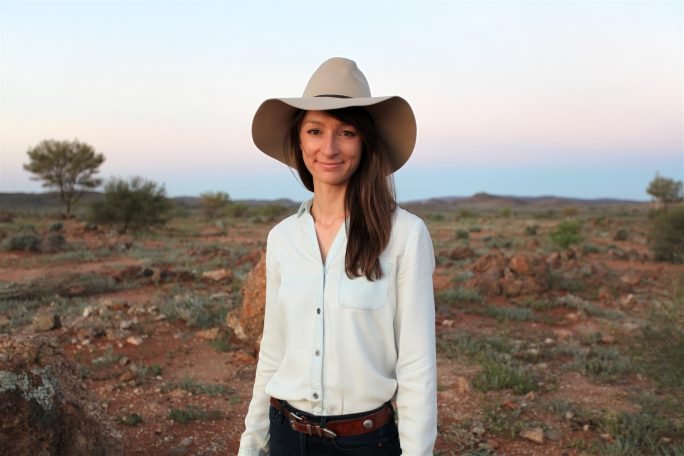
“More people are switched on to the problem of climate change than ever before and we see better articles in the media,” she said. “There is less climate debate and scepticism, and there is some fantastic research into technologies for clean energy, so I can understand those reasons.
“Government action in Australia, however, is woefully behind the mark. We have so many opportunities: We have an abundance of natural resources, we’re the sunniest and windiest country, we have an incredible science community, and we have financial and political stability. We could be positioned as leaders. It’s frustrating we’re consistently ranked at the bottom for climate action.”
While Anika listed strategies and firm targets as much-needed Government actions, she said the way Government talks about climate change was key to exacting widespread behaviour change.
“The narrative is that it’s something for a later time, and we need to change that,” she said. “We need to portray an honest and upfront account using science and without making it extreme. It’s not being a Pollyanna and it’s not a doom-laden picture of the future, otherwise people will give up. It’s the middle ground, presenting the facts as much as we can and moving the conversation into the solution sphere.
“It means equipping people with a good understanding of what climate change is; That it is personal, urgent and you, as the individual, can do so much about it.
“The Government needs to be telling the climate change story the way it talks about Covid. Imagine a scientist at the lectern every evening counting how many people are dying of climate change and advising what you as an individual need to be doing today. We would see large scale social change happen.”
Small things you can do with big impact
This month Anika released a climate change ‘call to arms’ in the form of her first book, Our Sunburnt Country. The final chapter outlines actions that each person can take today, this week, this month, and this year.
Here are five personal favourites:
- Think about your food: When you open the fridge today, consider where that food has come from, how it got to you, and the resources that went into producing it. Appreciate the food that fills your stomach.
- Practise conscious consumerism: Buy less and buy better.
- Invest your money wisely. A mindful money manifesto can help you budget and live more sustainably.
- Manage your power supply. Assess where your household and workplace energy are coming from, and switch to energy suppliers that provide clean energy.
- Engage with your local council. There are so many solutions and resources at a local level and change can be relatively easy to enact if you speak to the right people.
As Anika writes: “No one can do everything, but everyone can do something.”